Butt Weld Elbows Manufacturer and Supplier
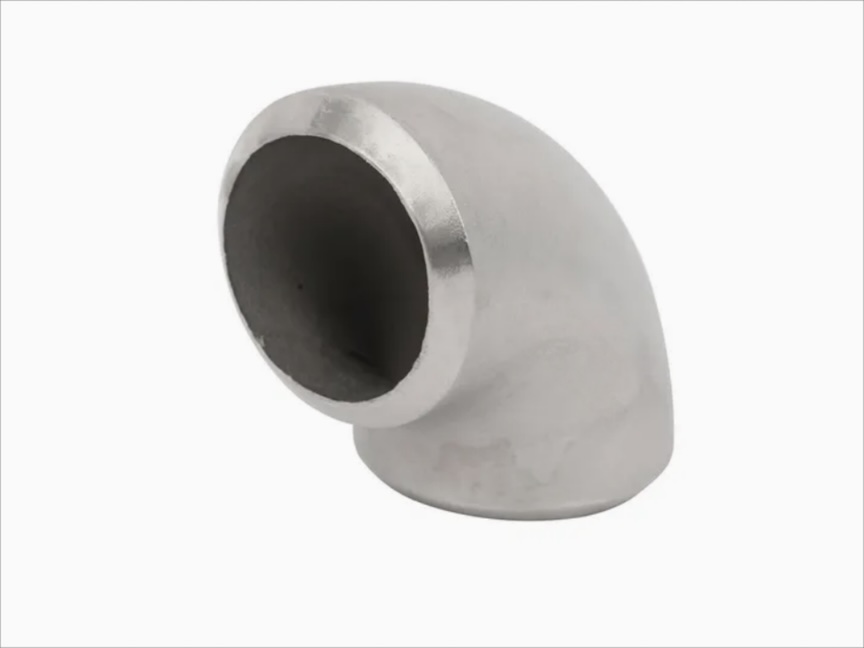
Butt Weld Pipe Elbows Manufacturer | ASME B16.9 / EN / GOST Pipe Fittings Supplier
Butt weld pipe elbows are used to change pipeline direction in industrial piping systems. Available in carbon steel, stainless steel, and alloy steel, these fittings are manufactured according to ASME B16.9, MSS SP-75, EN 10253-2/EN 10253-4, and GOST 17375 standards.
Facebook
Twitter
LinkedIn
Butt weld pipe elbows are widely used fittings designed to change the direction of piping systems in industrial applications. Compared with threaded or socket weld fittings, butt weld elbows provide stronger connections, better pressure resistance, and smoother fluid flow.
These fittings are commonly installed in oil and gas pipelines, petrochemical plants, power stations, water treatment systems, and shipbuilding projects. Their welded connection ensures long-term reliability in high-pressure and high-temperature environments.
As a professional manufacturer and supplier, we provide a full range of butt weld pipe elbows in carbon steel, stainless steel, and alloy steel, manufactured in accordance with international standards such as ASME B16.9, MSS SP, EN standards, and GOST standards.
Types of Butt Weld Pipe Elbows
Butt weld elbows are produced in different angles to meet various pipeline design requirements.
90 Degree Butt Weld Elbow
The 90 degree butt weld elbow is the most commonly used fitting in industrial pipelines. It changes the pipeline direction by 90 degrees while maintaining efficient flow characteristics.
Features:
-
Available in long radius (LR) and short radius (SR)
-
Suitable for high pressure piping systems
-
Reduces pressure loss and turbulence
-
Widely used in oil pipelines and refinery systems
45 Degree Butt Weld Elbow
A 45 degree elbow allows a smaller directional change and is typically used where smoother flow transitions are required.
Common applications include:
-
Chemical processing plants
-
Water treatment systems
-
Industrial piping networks
180 Degree Butt Weld Elbow
The 180 degree butt weld elbow, also known as a return elbow, is used when the pipeline must reverse direction.
It is often installed in:
-
Heat exchanger systems
-
Boiler piping systems
-
Compact piping layouts
Long Radius and Short Radius Elbows
Long Radius Elbow (LR)
A long radius elbow has a centerline radius equal to 1.5 times the pipe diameter (1.5D).
Advantages include:
-
Lower pressure drop
-
Improved fluid flow
-
Reduced turbulence
Long radius elbows are widely used in large pipeline systems and high-flow applications.
Short Radius Elbow (SR)
A short radius elbow has a radius equal to 1.0 times the pipe diameter (1D).
Benefits include:
-
Space-saving installation
-
Suitable for tight piping layouts
-
Commonly used in shipbuilding and compact equipment systems
Butt Weld Pipe Elbow Standards
Our butt weld pipe elbows are manufactured according to major international standards used in global piping projects.
ASME B16.9 Standard
ASME B16.9 specifies the dimensions and tolerances for factory-made wrought butt welding fittings.
This standard is widely used in:
-
Oil and gas industry
-
Petrochemical plants
-
Power generation facilities
MSS SP Standards
MSS standards are commonly applied to special piping applications.
Typical standards include:
-
MSS SP-75 – High-test wrought butt welding fittings
-
MSS SP-43 – Stainless steel butt weld fittings
These standards are widely used in pipeline construction projects.
EN Standards
European piping systems often follow EN standards, including:
-
EN 10253-2 – Butt welding fittings for pressure purposes
-
EN 10253-4 – Stainless steel butt weld fittings
These standards are used for European industrial and pressure equipment projects.
GOST Standards
In Russia and CIS countries, pipe fittings are typically produced according to GOST standards, including:
-
GOST 17375 – Steel butt welding elbows
-
GOST 17380 – Butt weld pipe fittings
These standards are widely applied in oil pipelines and heavy industry projects.
Materials of Butt Weld Pipe Elbows
Butt weld elbows are available in various materials depending on operating conditions.
Carbon Steel Elbows
Common grades include:
-
ASTM A234 WPB
-
ASTM A420 WPL6
-
ASTM A860
Carbon steel elbows are widely used in oil pipelines, gas transmission systems, and industrial piping networks.
Stainless Steel Elbows
Typical stainless steel grades:
-
ASTM A403 WP304 / WP304L
-
ASTM A403 WP316 / WP316L
-
ASTM A403 WP321
Stainless steel elbows provide excellent corrosion resistance and are suitable for chemical processing, food production, and pharmaceutical industries.
Alloy Steel Elbows
Alloy steel elbows are used in high-temperature and high-pressure systems.
Common grades include:
-
ASTM A234 WP11
-
ASTM A234 WP22
-
ASTM A234 WP91
These fittings are commonly used in power plants and refinery pipelines.
Butt Weld Pipe Elbow Size Chart (ASME B16.9)
The typical size range for butt weld pipe elbows is 1/2 inch to 72 inches with various wall thickness options.
| NPS | Outside Diameter (mm) | Long Radius |
|---|---|---|
| 1/2″ | 21.3 | 38 |
| 1″ | 33.4 | 38 |
| 2″ | 60.3 | 76 |
| 4″ | 114.3 | 152 |
| 6″ | 168.3 | 229 |
| 8″ | 219.1 | 305 |
| 12″ | 323.9 | 457 |
| 24″ | 610 | 914 |
Available wall thickness:
-
SCH 10
-
SCH 20
-
SCH 40
-
SCH 80
-
SCH 160
-
XXS
Manufacturing Process
The production of butt weld pipe elbows typically includes the following steps:
-
Raw material inspection
-
Pipe cutting
-
Hot forming or cold forming
-
Heat treatment
-
Surface finishing
-
Dimensional inspection
-
Non-destructive testing (NDT)
Strict inspection ensures the fittings meet international quality and safety requirements.
Applications of Butt Weld Pipe Elbows
Butt weld elbows are widely used in many industrial sectors, including:
-
Oil and gas pipelines
-
Petrochemical plants
-
Power generation systems
-
Shipbuilding industry
-
Chemical processing facilities
-
Water treatment plants
Their welded connection provides excellent strength, leak resistance, and long service life.
Frequently Asked Questions
What is a butt weld pipe elbow?
A butt weld pipe elbow is a pipe fitting used to change the direction of a pipeline. It is connected to the pipe through butt welding, forming a strong and leak-proof joint.
What is the difference between long radius and short radius elbows?
The difference lies in the radius of curvature.
-
Long radius elbow: 1.5 × pipe diameter
-
Short radius elbow: 1 × pipe diameter
Long radius elbows provide smoother flow and lower pressure loss.
What standards are used for butt weld elbows?
Common manufacturing standards include:
-
ASME B16.9
-
MSS SP-75
-
EN 10253
-
GOST 17375
In addition to butt weld reducers, we also supply a full range of butt weld pipe fittings, including